

Miniature horses. Capuchin monkeys. Emotional support peacocks. The internet has blurred the line between what actually qualifies as a service animal and what’s just a pet in a vest. That confusion costs real people with real disabilities their access rights every single day.
This guide cuts through the noise and covers:
- Which animals legally qualify under the ADA
- The miniature horse exception most people miss
- Why emotional support animals aren’t service animals
- State laws that expand beyond federal rules
- How different settings (housing, flights, work) change the rules
At Shultz K9 in Fort Lauderdale, we train service dogs that meet every legal standard. If you’re exploring your options, we can help you get started.
Which Animals Legally Qualify Under the ADA
Under the Americans with Disabilities Act, only dogs are recognized as service animals. That’s it. Not cats. Not birds. Not the emotional support iguana your neighbor brings to Trader Joe’s.
The Department of Justice locked this definition in place back in 2011. Before that, the rules were vague enough that people brought all kinds of animals into public spaces, claiming service animal status. The DOJ clarified that only specially trained dogs, and some miniature horses, qualified as service animals, putting an end to the chaos of chimpanzees, snakes, and lizards showing up in restaurants.
What the Law Actually Says
Under the Americans with Disabilities Act, the term service animal means a dog that is individually trained to do work or perform tasks for an individual with a disability. That includes physical, sensory, psychiatric, intellectual, or other mental disabilities.
Three things make this definition work:
- It must be a dog (with one exception we’ll cover next)
- It must be individually trained to perform tasks tied to the handler’s disability
- The tasks must be specific and actionable, not just general comfort
The key phrase is trained to perform. A dog that naturally senses your anxiety attack isn’t automatically a trained service animal. It becomes one when you teach it to take a specific action in response, like applying deep pressure therapy, guiding you to a safe space, or retrieving medication.
What About Other Federal Laws?
The ADA isn’t the only law that governs assistance animals. And different laws define a service animal differently.
| Law | What Qualifies | What It Covers |
|---|---|---|
| Americans with Disabilities Act (ADA) | Dogs only (+ miniature horses) | Public spaces, businesses, and government |
| Fair Housing Act (FHA) | Any animal (dogs, cats, birds, etc.) | Housing accommodations |
| Air Carrier Access Act (ACAA) | Dogs only | Air travel |
| Rehabilitation Act (Section 504) | Varies by agency | Federal programs and services |
Under the Fair Housing Act, the term “assistance animal” is used instead of “service animal,” and it takes a broader meaning. The animal may be a different species than a dog and must meet a disability-related need.
So your cat can qualify as an assistance animal in your apartment under the Fair Housing Act. But that same cat has zero public access rights under the ADA. Context matters. The law that applies depends entirely on where you are and what you’re trying to do.
The Air Carrier Access Act used to allow emotional support animals on flights. That changed in 2021. Now, only trained service dogs are permitted in the cabin, and airlines can require specific documentation. If you run into trouble with an airline, the Aviation Consumer Protection Division handles complaints.
Pro tip:Don’t assume one law’s protections carry over to another. Plenty of people with disabilities learn this the hard way when their housing-approved emotional support animal gets denied entry at a restaurant. Know which law applies in each situation.
Some state and local laws also expand on the federal definition. A few states permit service animals in training to access public spaces, which the ADA itself does not. Check your state’s attorney general website for specifics.
The Miniature Horse Exception Most People Miss
Dogs get all the attention. But there’s a second animal hiding in the ADA regulations that most people skip right over.
The Department of Justice’s ADA regulations have a separate provision about miniature horses that have been individually trained to do work or perform tasks for people with disabilities. They’re not included in the definition of a service animal. They exist as their own category with their own rules.
Why Miniature Horses?
It’s not a joke. There’s a strong practical case for miniature horses as service animals.
They live 25 to 35 years, compared to a service dog’s typical 8-10 year working life. For someone who depends on a trained service animal daily, that lifespan difference means fewer transitions, less retraining, and more consistency. They’re also incredibly strong. A miniature horse can provide mobility assistance and pull a wheelchair in ways that even a large dog physically cannot.
Miniature horses generally range in height from 24 inches to 34 inches measured to the shoulders and generally weigh between 70 and 100 pounds. That puts them roughly at the size of a large dog, which is smaller than most people picture.
The Four Assessment Factors
Unlike service dogs, miniature horses don’t get automatic access. Businesses and local governments must permit service animals, but for miniature horses, they only need to make reasonable modifications. The ADA sets out four assessment factors to determine whether a miniature horse can be accommodated:
- Is the horse housebroken?
- Is the horse under the owner’s control?
- Can the facility accommodate the horse’s size and weight?
- Will the horse’s presence compromise legitimate safety requirements?
If the answer to all four is favorable, the facility must permit the miniature horse. But unlike service dogs, a business can legally deny access if the space simply cannot accommodate the animal’s size. A cramped coffee shop with narrow aisles has a stronger case for denial than a big-box retailer with wide walkways.
The horse still needs to be individually trained. It still needs to perform tasks directly tied to the handler’s disability. And if the horse poses a direct threat to the health or safety of others, a business can ask for its removal, just like with a service dog.
Horses vs. Dogs: Quick Comparison
| Service Dog | Service Miniature Horse | |
|---|---|---|
| ADA status | Included in service animal definition | Separate provision, reasonable modification |
| Lifespan | 10-14 years (8-10 working) | 25-35 years |
| Public access | Automatic in all public areas | Subject to four assessment factors |
| Size | Varies by breed | 24-34 inches, 70-100 lbs |
| Housing (FHA) | Protected | Protected as assistance animal |
| Air travel (ACAA) | Permitted in cabin | Not permitted on flights |
If you’re considering a miniature horse as a service animal, document everything. Keep training records, veterinary records, and a clear list of trained tasks. Because this option is less common, you’ll face more questions from businesses. Having documentation ready makes those interactions smoother.
Why Emotional Support Animals Aren’t Service Animals
This is the section that generates the most confusion. And the most arguments.
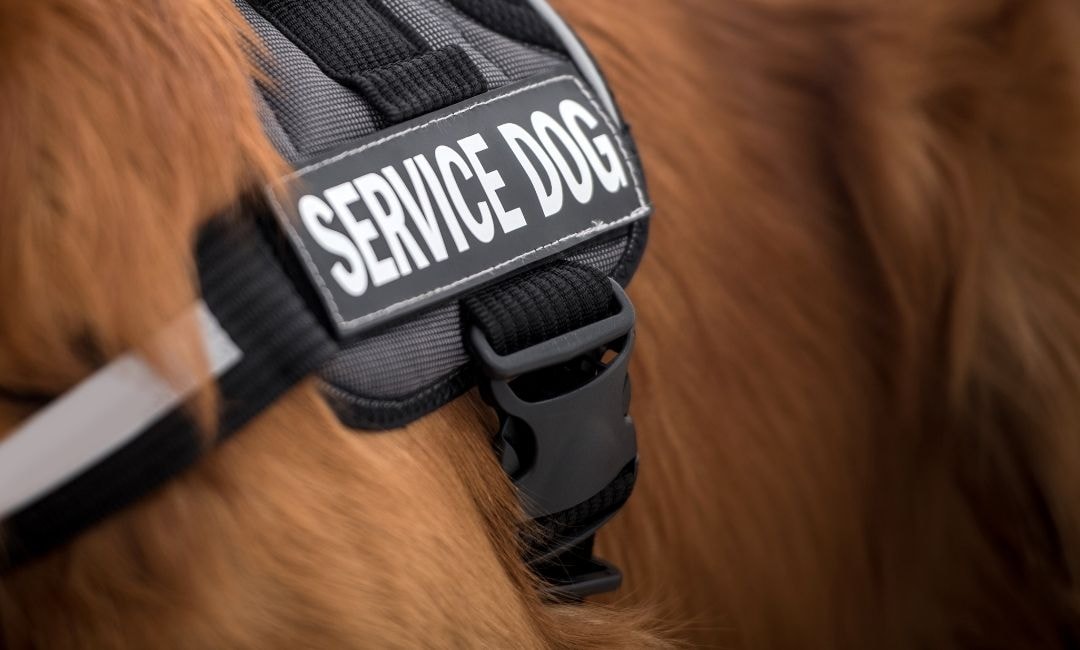
Emotional support animals, therapy animals, comfort animals, and companion animals are not service animals under the ADA. Period. The Department of Justice is clear: because they have not been trained to perform a specific job or task, they do not qualify as service animals under the ADA.
That doesn’t mean they aren’t valuable. It means they occupy a different legal category with different rights and restrictions.
The Core Difference in One Sentence
A trained service animal performs tasks. An emotional support animal provides comfort through its presence.
That single distinction changes everything about where the animal can go, what protections you have, and what businesses can legally ask you.
If a dog has been trained to sense that an anxiety attack is about to happen and take a specific action to help avoid it or lessen its impact, that qualifies as a service animal. However, if the dog’s mere presence provides comfort, that would not be considered a service animal under the ADA.
What This Looks Like in Practice
Let’s say two people with disabilities both have dogs that help with anxiety.
- Person A: Their dog is trained to detect the physiological signs of a panic attack, then apply deep pressure therapy by laying across their lap and nudging their hand to initiate grounding. The dog has been individually trained to perform tasks tied to a specific disability. That’s a psychiatric service animal.
- Person B: Their dog sits next to them, and they feel calmer. The dog hasn’t been trained to take any specific action. It just makes them feel better by being there. That’s an emotional support animal.
Person A can take his or her service animal into any restaurant, store, or government building in the country. Person B cannot.
Where ESAs Do Have Rights
Emotional support animals aren’t without legal protections. They just operate under different laws.
| Setting | ESA Rights | Governing Law |
|---|---|---|
| Housing | Landlords must make reasonable accommodations | Fair Housing Act |
| Air travel | Limited; most airlines no longer accommodate ESAs | Air Carrier Access Act (2021 update) |
| Public spaces | No access rights | ADA does not apply |
| Workplaces | Case-by-case reasonable accommodation | Rehabilitation Act / state laws |
The Fair Housing Act is the strongest protection ESA owners have. Landlords cannot charge pet fees or deny housing to someone with a legitimate ESA letter from a licensed mental health professional, even in buildings with “no pets” policies.
But that’s about it for federal protections. Some state and local laws extend ESA rights further, so check your jurisdiction.
And Therapy Dogs? Different Again.
Therapy dogs and therapy animals are trained for basic obedience and sociability, then visit hospitals, schools, and nursing homes to provide comfort to groups of people with disabilities or other challenges. They’re not trained to perform tasks for one specific handler.
Therapy animals have no public access rights under the ADA. They enter facilities only with the institution’s permission. You can’t bring a therapy dog into a grocery store just because it completed a therapy certification program.
Here’s the hierarchy, simplified:
- Service dogs = Full ADA public access, trained to perform tasks for one individual with a disability
- Emotional support animals = Housing protections under theFHA, no public access
- Therapy animals = Institutional access only, by invitation
- Pets = No legal protections beyond local animal ordinances
If someone tells you they can “register” or “certify” your pet as an emotional support animal online for $50 and give it public access rights, they’re selling you something that doesn’t exist. No website can grant ADA protections. Only actual task training does that.
State Laws That Expand Beyond Federal Rules
The ADA sets the floor, not the ceiling. And plenty of states have built well above it.
The ADA is a federal civil rights law with national reach. However, states can adopt a different service animal definition for purposes of state enforcement. When a state law provides broader protections, the state law applies in that jurisdiction. This means your rights as a handler can change depending on where you live.
Where States Go Further
The most common service animals under the ADA are dogs. But some state or local laws expand the definition to include other animals or cover situations the ADA doesn’t address. Here are the biggest areas where states diverge:
- Service animals in training. The ADA does not grant public access rights to dogs still in training. Currently, nearly every state except Hawaii covers service animals in training under its public accommodation law. That means in most states, you can bring a working service animal in training into restaurants, stores, and public facilities before the dog is fully trained.
- Misrepresentation penalties. The ADA has no criminal penalty for faking a service animal. States have filled that gap aggressively. Several states are tightening regulations and increasing fines to $500 or more per violation for people who falsely claim their pet is a service animal. Some states treat it as a misdemeanor offense.
- Broader animal species. A few states define service animal more broadly than dogs and miniature horses. While wild animals never qualify, some states permit miniature horses or other animals in specific contexts beyond what the ADA requires.
- Damages in discrimination cases. Here’s one that matters more than people realize. Title III of the ADA does not allow for compensatory damages, but some state equivalents do. In Pennsylvania, for example, a business that unlawfully denied entry to a person with a disability and their guide dog was ordered to pay $25,000 under state law, something that wouldn’t have been possible under the ADA alone.
Quick Snapshot of State Variations
| State Expansion | Examples |
|---|---|
| Service animals in training access | California, New York, Florida, Texas, Massachusetts |
| Misrepresentation fines | Colorado ($500+), Florida, Virginia, California |
| Criminal penalties for harming service animals | Most states except AK, IA, MT, WV |
| Broader definitions than ADA | Varies; some include hearing dogs and guide dogs by name |
| State-level compensatory damages | Pennsylvania, California, others |
What This Means for You
If you’re a handler, the takeaway is straightforward: always check your state’s laws in addition to the ADA. Your state might give you more rights than you realize, especially if you’re still in the training phase or if you’ve experienced discrimination.
The ADA National Network provides state-by-state resources, and your state’s attorney general office can point you to the specific statutes that apply. Don’t assume the federal rules are all you have.
Pro tip: If a business denies access to you and your trained service animal, document everything. Date, time, location, names if possible, and what was said. Under state and local government regulations, you may have stronger legal remedies than you’d get under the ADA alone. Some states allow you to sue for actual damages, not just an injunction.
At Shultz K9, we train service dogs to meet both federal and Florida state standards. Our Fort Lauderdale team stays current on disabilities act requirements at every level, so your dog is prepared for any legal situation you might encounter.
How Different Settings Change the Rules
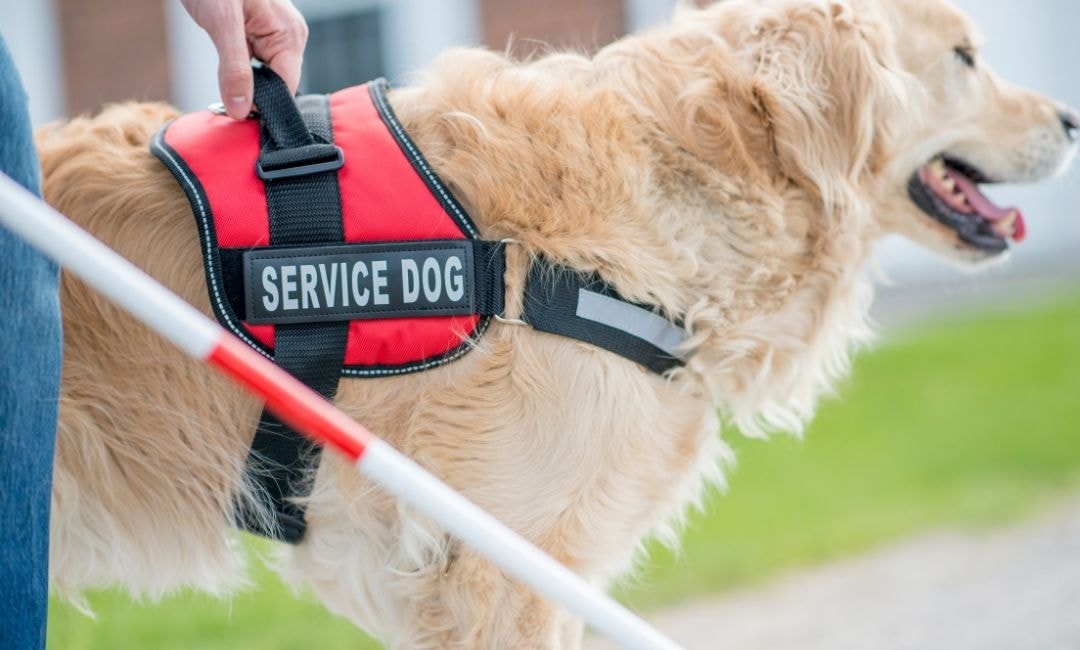
This is where most people get lost. The rules for service animals don’t stay the same everywhere you go. Where you are determines which law applies, which animal species qualifies, and what businesses can ask you.
Think of it as three separate legal worlds: public spaces, housing, and air travel. Each one plays by different rules.
Public Spaces (ADA)
The Americans with Disabilities Act governs public accommodation, commercial facilities, and state and local government entities. This is the strictest definition. Only dogs (and miniature horses, where reasonable) that are individually trained to perform tasks for a person with a disability qualify.
Businesses must permit service animals in all areas open to the public. A restaurant must let a person with a disability bring his or her service animal inside, even if local health codes ban other animals. A hospital must allow guide dogs in patient rooms, clinics, and cafeterias.
There are only two narrow exceptions:
- A service animal behaves in a way that is out of control, and the handler doesn’t take effective action. The business can ask for the animal’s removal, but must still serve the person without the animal.
- The animal’s presence would fundamentally alter the nature of the service or compromise legitimate safety requirements. For example, it may be appropriate to exclude service animals from an operating room or a sterile lab environment where the animal’s presence creates a direct threat.
A business can never deny access because other customers have allergies or are afraid of dogs. They also cannot charge extra fees, require the animal demonstrate its tasks, or ask about the person’s disability. Those are hard lines.
What about companionship animals, therapy dogs, or emotional support animals? They have zero access rights in public spaces under the ADA. Only trained service animals qualify.
Housing (Fair Housing Act)
The Fair Housing Act, enforced by the Department of Housing and Urban Development, takes a much broader approach.
Under the FHA, landlords must make reasonable accommodations for assistance animals, which include both trained service dogs and untrained emotional support animals. The animal species isn’t limited to dogs. Cats, birds, rabbits, and other common domestic animals can all qualify as long as a licensed professional provides documentation connecting the animal to the person’s disability.
Key housing rules:
- No pet fees or deposits can be charged for assistance animals
- No breed or size restrictions apply to service dogs
- No “no pets” policy overrides a legitimate accommodation request
- Landlords can deny if the specific animal poses a direct threat or would cause substantial property damage
- Landlords can request documentation if the disability isn’t obvious
The FHA is the strongest protection for people with post-traumatic stress disorder or other mental health conditions who rely on emotional support animals at home. But remember: that protection ends at your front door. The moment you step into a grocery store, the ADA takes over, and your ESA has no access rights.
Pro tip:If a landlord denies your request, file a complaint with the Department of Housing and Urban Development. You don’t need a lawyer to start the process, and HUD investigates these claims seriously.
Air Travel (Air Carrier Access Act)
Air travel used to be a free-for-all for assistance animals. Not anymore.
Since the 2021 rule change, the Air Carrier Access Act only recognizes trained service dogs as service animals on flights. Emotional support animals, miniature horses, and all other animals are treated as pets, subject to airline pet policies and fees.
What airlines can require:
- A DOT service animal form confirming the dog is trained to perform tasks related to the handler’s disability
- Attestation of the dog’s behavior and health
- Airlines can require forms up to 48 hours before departure
What airlines cannot do:
- Deny boarding solely because of the dog’s breed or size
- Require the dog to sit in a carrier if it fits at the handler’s feet
- Charge fees for a legitimate trained service animal
If an airline violates your rights, you can file a complaint with the Aviation Consumer Protection Division of the Department of Transportation. Keep your documentation and your boarding pass.
Workplace (ADA Title I + Rehabilitation Act)
The rules shift again in an employment setting. Under Title I of the Americans with Disabilities Act and Section 504 of the Rehabilitation Act, an employee with a disability can request a service animal in the workplace as a reasonable accommodation.
But unlike public accommodation rules, employers have more room to evaluate the request:
- They can engage in an “interactive process” to assess whether the accommodation is reasonable
- They can deny the request if the dog’s presence poses an undue hardship or a direct threat
- They can consider the physical support needs of the role and whether the animal fits the work environment
For federal employees, the Rehabilitation Act applies rather than the ADA, but the protections are similar.
Education (ADA + IDEA)
Schools fall under the ADA for public access, but K-12 public schools also intersect with the Individuals with Disabilities Education Act. This law governs special education services and can include provisions for service animals that assist students with disabilities in the classroom.
Public facilities like universities fall under Title II of the ADA and must permit service animals. They cannot require documentation, though prior to 2012, schools could require students with service animals to furnish documentation. That’s no longer the case.
Cheat Sheet: Rules by Setting
| Setting | Governing Law | Animals Allowed | Key Rule |
|---|---|---|---|
| Stores, restaurants, government | ADA (Titles II & III) | Dogs + miniature horses | Must permit; two questions only |
| Housing | Fair Housing Act | Any domestic animal | Reasonable accommodation required |
| Airlines | Air Carrier Access Act | Dogs only | DOT form required; no ESAs |
| Workplace | ADA Title I / Rehab Act | Dogs (case-by-case) | Interactive process with employer |
| K-12 schools | ADA + IDEA | Dogs + miniature horses | Cannot require documentation |
| Federal programs | Rehabilitation Act (504) | Varies | Modeled on ADA standards |
The bottom line? Know which law applies before you walk through the door. The most common service animals under the ADA are dogs, but other settings open the door to broader definitions. Don’t assume your rights are the same everywhere.
Get Your Service Dog Right With Shultz K9
The rules around service animals aren’t as complicated as they seem. Once you know which animals qualify, which laws apply, and how settings change the game, you can navigate the system with confidence instead of confusion.
- Only dogs (and miniature horses) qualify under the ADA
- Emotional support animals have housing rights, not public access
- State laws often provide stronger protections than federal rules
- Different settings mean different laws apply
- No certification, vest, or registration is legally required
- Task training is what separates a service animal from a pet
Whether you’re starting from scratch or need help getting your dog fully trained to perform tasks, Shultz K9 in Fort Lauderdale builds service dog teams that hold up under every legal standard. Give us a call at (954)-552-4282 or stop by our facility. We’ll take it from there.
Frequently Asked Questions
What animals can not be service animals?
Under the ADA, cats, birds, reptiles, ferrets, rabbits, and other animals are not considered service animals. Only dogs qualify, with miniature horses as a separate exception under a reasonable modification provision. Emotional support animals, regardless of species, also don’t count because they aren’t trained to perform specific tasks tied to a disability.
What is a service animal for anxiety?
A service animal for anxiety is a dog trained to perform specific tasks that directly mitigate anxiety-related symptoms. These are often classified as psychiatric animals trained for things like deep pressure therapy during panic attacks, creating physical space in crowded areas, or interrupting harmful repetitive behaviors. The key distinction is that the dog actively does something. An animal whose mere presence provides comfort is an emotional support animal, not a service animal.
What qualifies someone for a service animal?
You qualify if you have a physical or mental disability that substantially limits one or more major life activities, and you need a dog individually trained to perform tasks related to that disability. There’s no official application or approval process.
No doctor’s note is a service animal required for public access under the ADA, either. The qualifying factor is the relationship between your disability and the trained task the dog performs.
Can you legally ask for proof of a service dog in Florida?
No. Under both Florida law and the ADA, businesses cannot request certification, ID cards, medical documentation, or any other proof that your dog is a service animal. They can only ask two questions: is this a service animal required because of a disability, and what task has the dog been trained to perform. Demanding anything beyond that is illegal. Florida takes this seriously, too. Denying access to a legitimate service dog is a second-degree misdemeanor punishable by up to 60 days in jail, a $500 fine, or both.
What are the most common service animals?
Dogs are the only animals considered service animals under the ADA, so they make up virtually 100% of the service animal population. The most common breeds include Labrador Retrievers, Golden Retrievers, German Shepherds, and Standard Poodles.
These breeds dominate because of their temperament, trainability, and ability to keep a service animal’s safe, predictable behavior in public settings. Miniature horses are occasionally used under the ADA’s separate reasonable modification provision, though they’re far less common.
What disabilities qualify for a service dog?
The ADA doesn’t publish a fixed list, but qualifying disabilities include visual or hearing impairments, mobility limitations, PTSD, seizure disorders, autism, diabetes, severe anxiety, and other conditions that substantially limit major life activities.
The disability itself doesn’t determine eligibility on its own. What matters is whether a dog can be trained to perform a specific task that directly addresses your limitation, like alerting to blood sugar drops, guiding through spaces, or interrupting a dissociative episode.
