

You’ve seen them in airports, grocery stores, and restaurants. A dog in a bright vest with a “Do Not Pet” patch, walking calmly beside its handler. So naturally, you assume the vest is required. It’s not. The ADA does not require service animals to wear a vest, ID tag, or specific harness.
That surprises a lot of people. And it raises even more questions about what’s actually required, what’s optional, and what happens when you skip the vest entirely. This guide covers:
- What the ADA actually says about service dog vests
- Service dog vests vs. emotional support animal vests
- Why most handlers still choose to use one
- The two questions businesses are legally allowed to ask
- How proper training matters more than any vest ever will
At Shultz K9, we train service dogs and working dogs at our Fort Lauderdale facility to perform at the highest level, vest or no vest. If you’re navigating the service dog world, we’ve got answers.
What the ADA Actually Says
No, service dogs are not required to wear a vest. Not by the ADA. Not by any federal law.
The ADA does not require service animals to wear a vest, ID tag, or specific harness. What does define a service dog is its training and behavior. If a dog has been individually trained to perform a specific task related to a handler’s disability, it qualifies. Period. No vest needed.
That means a dog without a vest can still be a fully legitimate service animal. And a dog with a vest? That alone doesn’t prove anything either. A dog wearing a vest is not necessarily a service animal, as it still needs to be trained to perform a task for a person with a disability.
What Businesses Can (and Can’t) Ask
This is where things get practical. When it is not obvious that a dog is a service animal, staff may ask only two specific questions:
- Is this a service animal required because of a disability?
- What work or task has the dog been trained to perform?
That’s it. They cannot:
- Ask about the nature of your disability
- Request medical documentation
- Demand a certification or ID card
- Ask the dog to demonstrate its task
Pro tip: Even though you don’t need a vest, having one can reduce how often you get stopped with these questions in the first place.
No Certification Required Either
This one catches people off guard. Your service dog isn’t required to wear a special vest, carry a certificate or ID card, or be registered with any federal, state, or independent entity. Those online “registries” selling certificates and official-looking IDs? They carry zero legal weight under the ADA.
What actually matters is that your dog is trained to perform tasks directly tied to your disability. And that training doesn’t even need to come from a professional. You can train the dog yourself, though working with an experienced trainer makes a significant difference in reliability and real-world readiness.
That’s where programs like Shultz K9’s service dog training come in. Our Fort Lauderdale team trains dogs to perform at a high level in real-world, high-distraction environments, which is exactly the kind of foundation a service dog needs to succeed with or without a vest.
Service Dog Vests vs. ESA Vests
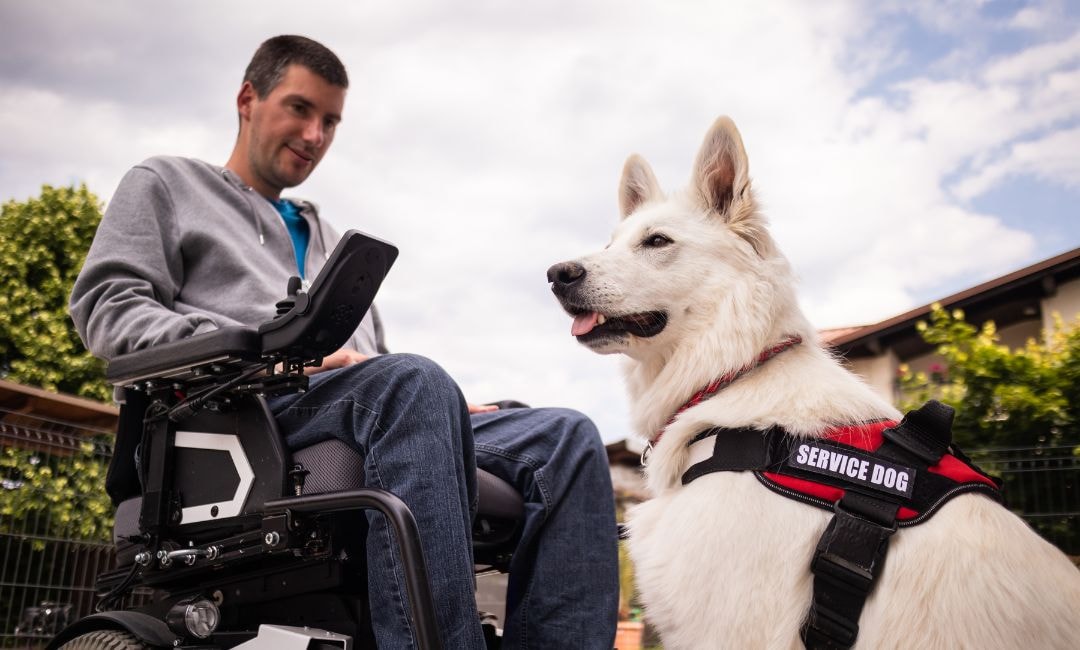
People wonder about the difference between a service dog vest and an emotional support animal (ESA) vest all the time. And honestly, the confusion makes sense. Both types of dogs might wear vests. Both might look calm and well-behaved in public spaces. But their legal standing under the Americans with Disabilities Act is very different.
Here’s the key distinction: a service animal is a dog that has been individually trained to do work or perform specific tasks for an individual with a disability. An ESA, on the other hand, provides comfort simply by being present. No task training required.
That difference changes everything about where they can go and what protections they have.
Where Each One Is Protected
| Service Dog | Emotional Support Animal | |
|---|---|---|
| Governing Law | Americans with Disabilities Act | Fair Housing Act |
| Public places (restaurants, stores, etc.) | Yes, full access | No |
| Housing | Yes, as a reasonable accommodation | Yes, as a reasonable accommodation |
| Airlines | Yes (with DOT form) | No (removed in 2021) |
| Vest required? | No | No |
| Task training required? | Yes | No |
| Breed restrictions | Cannot be excluded by breed | Evaluated individually by the housing provider |
This is where it gets tricky. The ADA makes a distinction between psychiatric service animals and emotional support animals. For example, if a dog trained to sense that an anxiety attack is coming and takes a specific action to help prevent or reduce it, that dog qualifies as a psychiatric service animal. But if the dog’s role is simply to be nearby for comfort, it’s an ESA.
What About Therapy Dogs?
Therapy dogs fall into yet another category. These are typically pets trained to provide comfort in institutional settings like hospitals, schools, or nursing homes. They’re not covered by the Americans with Disabilities Act at all. Therapy dogs are not trained to perform a specific task for an individual with a disability.
So even though therapy dogs, ESAs, and service dogs might all wear vests in public, only service dogs have full public access rights under federal law.
Pro tip: A vest doesn’t make a dog a service animal. A labeled vest might look official, but without proper task training tied to a person’s disability, it’s just a piece of fabric. Some states now have laws penalizing people who misrepresent pets as service animals.
The Fair Housing Act offers broader protections for both service dogs and ESAs in housing. Under this law, landlords must provide reasonable accommodation for people with disabilities, which means allowing assistance animals even in no-pet buildings. But that protection only applies to housing. Step outside your apartment with an ESA, and the ADA guidelines are what matter.
Why Most Handlers Still Choose One
If service dogs don’t legally need a vest, why do most handlers choose to use one anyway?
Because the real world doesn’t always follow the law.
Fewer Confrontations in Public
Even though businesses and covered entities are only allowed to ask two specific questions about a working service dog, many employees don’t know the rules. A dog without visible signs of its role draws more attention, more questions, and more confrontations. A labeled vest with patches like “Service Dog” or “Do Not Pet” immediately signals the dog’s job and reduces interruptions during public outings.
Think of it this way. A handler with an unlabeled German Shepherd walking into a restaurant is going to get stopped far more often than one whose dog is clearly wearing a vest that communicates its dog’s role. That’s not how it should work, but it’s how it does work.
Keeps the Public at a Distance
One of the biggest challenges handlers face is strangers approaching to pet their dog. This is more than just annoying. It’s a safety issue. When someone distracts a working service dog from its job, the handler loses a critical layer of support. A vest gives the public a visual cue to keep their distance without the handler needing to explain themselves over and over.
Helps the Dog Stay in “Work Mode”
Many experienced trainers (ourselves included) find that dogs respond to gear cues. When the vest goes on, the dog knows it’s time to focus. When it comes off, the dog can relax. This psychological shift helps maintain control and consistency, especially in high-distraction environments.
It Can Prevent Access Disputes
Without a vest, handlers are more likely to face pushback at restaurants, hotels, and other areas where staff may not fully understand ADA guidelines. While no business can legally deny entry to a legitimate service animal based on the absence of a vest, having one prevents the conversation from even starting. That means smoother access and less stress for both the handler and the dog.
Pro tip:If you’re going to use a vest, invest in one with clear, high-contrast patches. Generic vests without readable identification don’t do much to communicate the dog’s role effectively.
Two Questions Businesses Can Ask
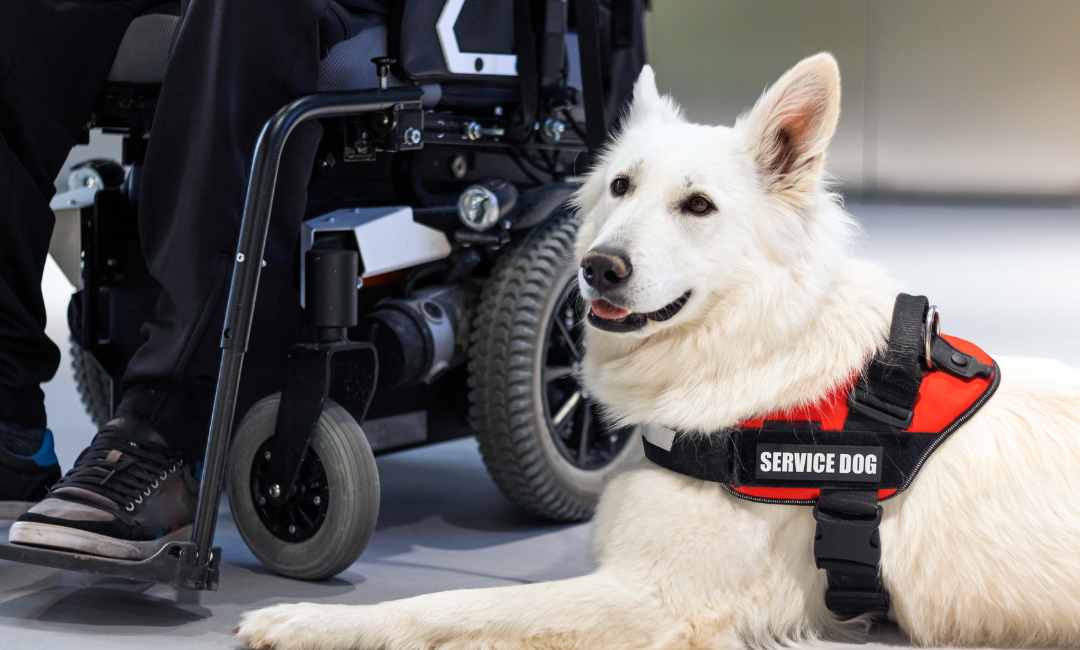
This section matters whether you’re a handler or a business owner. Because getting this wrong can lead to ADA violations on one side, or denied access on the other.
The Only Two Legal Questions
When it is not obvious that the dog is a service animal, staff may ask only two specific questions:
- Is this a service animal required because of a disability?
- What work or task has the dog been trained to perform?
That’s the full extent of what any employee at a public accommodation, restaurant, hotel, or government building can ask. These questions apply to all covered entities under the Americans with Disabilities Act.
What They Cannot Do
This is where many businesses get it wrong. Staff cannot:
- Ask about the nature of the person’s disability
- Request medical records or a doctor’s note
- Demand that the dog perform its task on the spot
- Require a certification, ID card, or special harness
- Deny access based on the dog’s breed (yes, that includes pit bulls and German shepherds)
A service animal may not be excluded based on assumptions or stereotypes about the animal’s breed or how the animal might behave. Even in cities with breed-specific local laws, those bans don’t override ADA protections for service dogs. The only exception is if that specific dog poses a direct threat to health or safety based on its actual behavior.
When a Business Can Remove a Service Animal
There are exactly two scenarios where a business can ask a handler to remove their service animal:
- The dog is out of control, and the handler does not take effective action to control it
- The dog is not housebroken
Even then, the business must still offer the person with a disability the opportunity to access goods and services without the animal present. They can’t just turn you away entirely.
It’s also worth noting that a service animal must be allowed in virtually all public places, including restaurants, stores, hospitals, and hotels. The only real exception is when the dog’s presence would cause a fundamental alteration to the nature of a service or program. For example, keeping a service dog out of an operating room where a sterile environment is critical.
Pro tip: If you’re ever denied access, stay calm and reference the ADA’s two-question rule. Most access issues stem from a lack of training on the staff’s end, not intentional discrimination. You can file a complaint with the U.S. Department of Justice if needed.
Training Matters More Than Any Vest
Here’s the part most articles skip. They’ll tell you a vest is optional (true), explain the law (important), and leave it there. But the real question handlers should be asking isn’t “does my dog need a vest?” It’s “Is my dog trained well enough that the vest barely matters?”
Because a vest on a poorly trained dog is just decoration.
What Good Training Actually Looks Like
A well-trained service dog should be able to:
- Remain calm and focused in high-distraction public places like airports, malls, and restaurants
- Perform specific tasks tied to the handler’s disability reliably and on command
- Ignore other people, animals, food, and loud noises
- Walk on a loose leash without pulling, lunging, or wandering
- Settle quietly under a table or at the handler’s feet for extended periods
This level of discipline doesn’t happen overnight. It’s the result of hundreds of hours of structured obedience, socialization, and task-specific training. And while the ADA doesn’t require professional training, there’s a significant gap between a dog that technically qualifies and one that truly helps its owner live independently with confidence.
Breed Doesn’t Determine Success
People wonder if only certain breeds can be service dogs. The short answer: no. The ADA does not restrict the type of dog breeds that can be service animals. Any breed can qualify, from Labrador Retrievers to pit bulls, from German Shepherds to Chihuahuas. What matters is whether the dog has been individually trained to assist with a person’s disability through specific tasks.
That said, breed does influence temperament, drive, and trainability. Some breeds take to service work more naturally than others. Working with a professional trainer who understands breed-specific tendencies can help you select and develop the right dog for the job.
A Vest Can’t Replace Real-World Readiness
Here’s the uncomfortable truth. Many people buy a vest online, slap it on an untrained pet, and call it a service animal. This creates real problems for legitimate handlers. Even in cities or other areas where some breeds are banned, a service animal may be any breed of dog, and service animals may not be excluded due to generalized fear of the breed. But fake service dogs erode public trust and make access harder for everyone.
The best thing any handler can do is invest in training that makes their dog a model citizen in every environment. When your dog performs flawlessly in public spaces, people don’t question whether it belongs there. The vest becomes a nice-to-have, not a crutch.
Where We Come In
At Shultz K9, we train dogs to perform at an elite level in real-world conditions. Whether you need service dog training, behavior modification, or advanced obedience, our Fort Lauderdale team builds dogs that are calm, confident, and reliable in any setting. We focus on the training that makes a dog truly ready for its job, because that’s what keeps both the handler and the public safe.
Build a Better Service Dog With Shultz K9
At the end of the day, a vest is a tool. It can help signal your dog’s role, reduce interruptions, and make public access smoother. But it will never replace what truly defines a service animal: rock-solid training, reliable behavior, and the ability to perform its job when it matters most.
Here are the key takeaways:
- No vest is required by law. The ADA does not mandate that service dogs wear vests, ID tags, or any special gear
- Training defines legitimacy. A service animal must be individually trained to perform specific tasks tied to a person’s disability
- Businesses can only ask two questions. They cannot demand documentation, certifications, or a demonstration of tasks
- ESAs and therapy dogs are not service animals. They have different legal protections and limited public access rights
- Breed doesn’t matter. Any breed can be a service dog, and no business or local government can deny access based on breed alone
- Misrepresenting a pet as a service dog is illegal in more than half of the U.S. states
Whether you’re training a service dog from scratch or strengthening the obedience of a dog already in your life, we can help. Our team at Shultz K9 in Fort Lauderdale specializes in building dogs that are confident, controlled, and ready for real-world work. Get in touch with us or call (954)-552-4282 to talk about your training goals. Financing starts at $199/month.
FAQs
Can you bring a service dog into a store without a vest?
Yes. The ADA does not require service dogs wear vests, ID tags, or any identifying gear to enter public places. If it’s not obvious that the dog is a service animal, store staff can only ask the two legally permitted questions. A vest helps reduce those interactions, but it’s not a legal requirement.
How do people prove they have a service dog?
They don’t have to. There’s no federal requirement for certification, registration, or documentation. The only verification allowed is those two ADA questions: is this a service dog required because of a disability, and what task has it been trained to perform? No proof beyond that can be demanded.
Can a hotel ask for proof that your dog is a service dog?
A hotel can ask the same two questions that any business can. They cannot ask for medical records, demand a doctor’s note, require a certification, or charge you a pet fee. If the dog is trained, well-behaved, and under your control, the hotel must allow it. Denying access based on a lack of paperwork violates ADA guidelines.
Is it illegal for a non-service dog to wear a service dog vest?
It depends on where you live. In 28 states and the District of Columbia, it is a crime to fraudulently represent that an animal is a service animal, including by fraudulently using an insignia or service-animal vest.
Penalties vary by state and local laws, ranging from fines to community service. Some local governments are pushing for stricter enforcement as fake service dogs continue to undermine trust in legitimate working teams.
How do I make my dog a legit service dog?
Your dog must be trained to perform at least one specific task directly related to your disability. The ADA does not require professional training, so you can train the dog yourself. However, working with an experienced trainer significantly improves reliability, public behavior, and real-world readiness.
State and local laws may also require standard licensing and vaccinations. If you’re serious about preparing your dog for service work, talk to our trainers at Shultz K9 about where to start.
